-
 Logo
Design
Logo
Design
-
Corporate
Material
-
Brochure Design
- Flyer
Design
- Banner
Design
-
Packaging
Design
-
Digital
Marketing
-
SEO
-
Social Media
Marketing & Management
-
Website Design
& Development
-
Promotional
Videography
-
Product
Photography
- Brand
Consulting

-
Exhibition
Stall
Design & Development
Branding &
Marketing Material
Website &
Digital Solutions
Photography &
Video Production

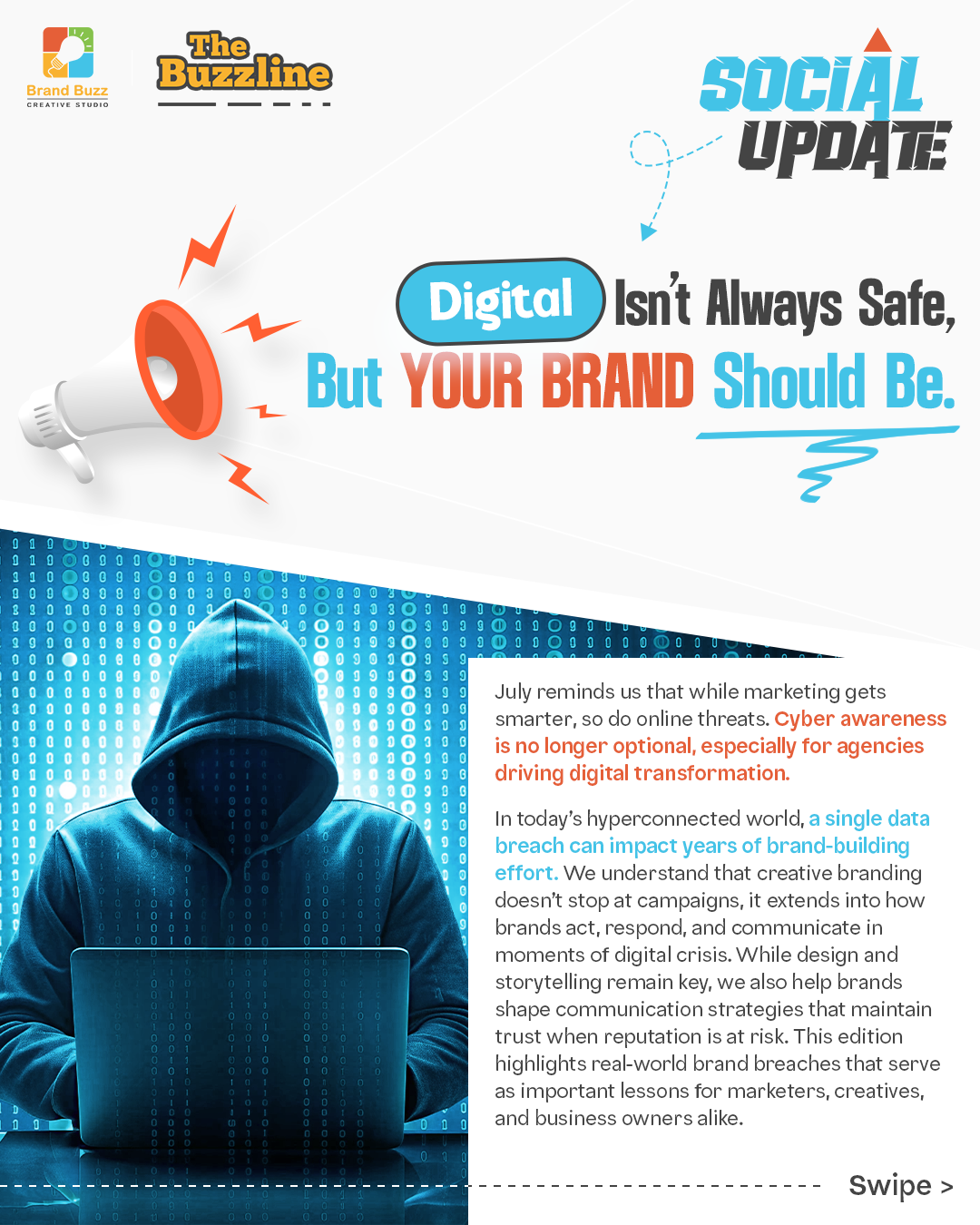
Digital Isn't Always Safe, But YOUR BRAND Should Be
Let’s understand this better with a few real-world brand examples.
BigBasket
The online grocery platform BigBasket reported a data breach in 2020 affecting over 20 million users. The platform had invested in branding convenience and reliability, but the breach exposed the gap between marketing and backend security. It’s a reminder that 360° branding must include safety as a pillar.

Zoom
During the pandemic, Zoom became a household name. But as usage skyrocketed, so did security concerns, from "Zoom bombing" to unauthorized access. While the brand handled it with transparency and upgrades, it proved that even branding success needs a foundation of robust security planning.

Canva
Even a design-driven company like Canva wasn’t immune. In 2019, the platform suffered a data breach affecting 137 million users. The incident underlined how creative platforms and marketing tools must prioritize cybersecurity without compromising user experience.
Air India
In 2021, Air India announced a cyberattack where personal data of over 4.5 million passengers was compromised. For a brand trying to modernize its public image, such incidents set back branding efforts and erode consumer confidence, something marketing partners must help rebuild with transparent messaging.



- Home
- About Us
-
Services
- Logo
Design
- Corporate
Material
- Brochure
Design
- Flyer-Design
- Banner
Design
- Packaging
Design
- Digital
Marketing
- SEO
- Social Media Marketing
- Website Design
& Development
- Product
Photography
- Promotional
Videography
Branding & Marketing Material
Website & Digital Solutions
Photography & Video Production
- Portfolio
- Career
- Blogs
- Newsletter
- Contact Us